If you’re looking at Cedar Grove single-family homes, one thing becomes clear fast: this is not a one-size-fits-all market. You may see a classic 1950s split-level on one street, a larger colonial on another, and very different lot sizes depending on the neighborhood. Knowing what’s typical, what drives value, and where your budget fits can help you shop smarter. Let’s dive in.
Cedar Grove Home Stock at a Glance
Cedar Grove is largely a single-family market, and the numbers support that. Recent census-based estimates show about 5,100 housing units in town, with owner occupancy in the low-to-mid 80% range and very low vacancy.
That matters if you want a market with a strong owner-occupied base and a housing mix centered on detached homes. Census-based local planning data shows roughly 78% of the housing stock is in single-unit structures, and the township’s housing plan shows one-unit detached and attached homes make up a large share of the overall inventory.
Most Homes Are Mid-Century
A big part of Cedar Grove’s identity comes from when its homes were built. The township housing plan shows 35.17% of homes were built in the 1950s and 14.15% in the 1960s.
In plain English, about half the housing stock comes from that postwar era. Homes.com also reports a median year built of 1957, which lines up with the same pattern.
For you as a buyer or seller, that usually means you should expect mature neighborhoods, established streetscapes, and homes that may vary widely in how much they’ve been updated. Two houses from the same era can feel completely different depending on renovations, layout changes, and maintenance history.
Common Cedar Grove Home Styles
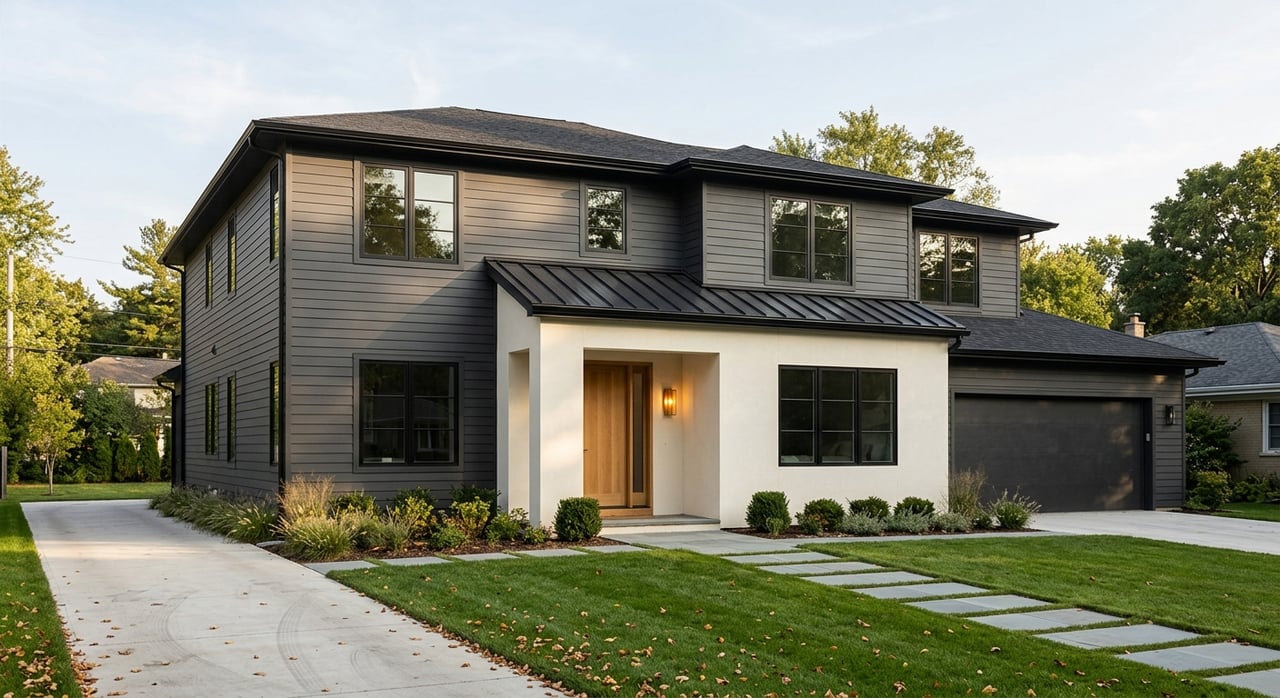
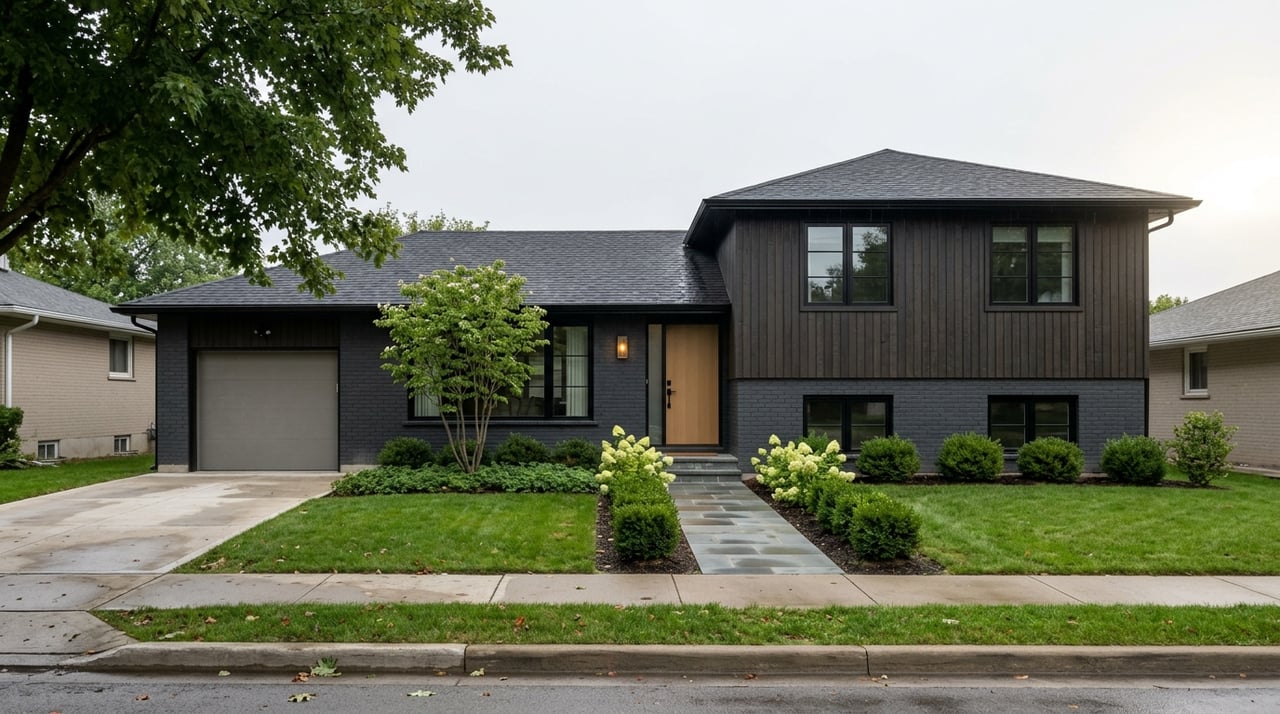
When buyers look at active single-family listings in Cedar Grove, a few styles show up again and again. The most common examples in current and recent inventory include:
- Colonial homes
- Split-level homes
- Split-level ranch homes
- Mid-century split homes
- Expanded split-level homes
This style mix fits the town’s postwar housing profile. If you’re coming from a market with more new construction or more dense housing options, Cedar Grove may feel more traditionally suburban in its layout and home design.
There are also a few historic homes in town, including much older properties dating back to the 18th and 19th centuries. Those homes are notable, but they are not the norm in the active single-family inventory.
Bedroom Count Expectations
Cedar Grove’s housing stock tends to line up with what many single-family buyers want most: practical bedroom counts. The township housing plan shows nearly half of the homes are three-bedroom properties.
It also reports 16.91% of units as four-bedroom homes and 16.65% as two-bedroom homes. That gives you a useful baseline if you are trying to match your budget to the type of space you need.
For many buyers, this means the market offers a solid middle ground. You may find enough variety to move from a starter-home search into a longer-term home search without leaving the town entirely.
Lot Sizes Vary More Than You May Think
One of the biggest misconceptions about Cedar Grove is that every single-family neighborhood follows the same lot pattern. It does not.
The township has seven single-family residential zones, with minimum lot sizes ranging from 8,000 square feet in the R-8 district to 5 acres in the R-5A district. Other districts include 10,000, 15,000, 18,000, 30,000, and 40,000 square foot minimums.
The township’s master plan also shows average lot sizes varying sharply by zone. Mean lot size is about 10,732 square feet in R-8, 16,287 in R-10, 21,843 in R-15, and 413,692 in R-5A.
What Lot Size Means for You
That range has real-world consequences when you’re comparing homes. Some areas offer the classic suburban feel of roughly 8,000 to 15,000 square foot lots, while others can feel much more spacious and estate-like.
If you care about yard size, expansion potential, privacy, or outdoor usability, lot size should be part of your first-pass search, not something you review at the end. A home’s value in Cedar Grove is not just about square footage inside the house. The site itself can make a meaningful difference.
Price Range for Cedar Grove Single-Family Homes
Cedar Grove sits in a mid-to-upper suburban price band, and several data sources point in that direction. U.S. Census QuickFacts lists a 2020 to 2024 median owner-occupied home value of $634,000, while the township housing plan reports a 2019 to 2023 median value of $600,500.
At the same time, current market-facing data shows higher active and recent sale pricing. Realtor.com’s June 2026 market summary shows a median listing price of $835,000 and a median sold price of $765,000. Homes.com’s July 2026 guide reports a median sale price of $799,545, and Redfin ZIP-level data shows a median sale price of $845,000 for the three months ending May 2026.
These numbers use different time periods and methods, so the best way to read them is as a range. They tell you Cedar Grove is not an entry-level market overall, but there is still variation within the single-family segment.
Where Homes Tend to Price
Recent asking prices in active single-family inventory have ranged from about $600,000 to $1.45 million. That is a wide spread, and it gives you a good sense of how much pricing can move based on the home itself.
In practical terms, smaller homes or homes needing more updates may land in the high-$600,000s or beyond. Larger homes, more renovated homes, or homes on more desirable lots can move well past $1 million.
If you’re building a search strategy, that means your budget should be tied to trade-offs. In Cedar Grove, price often reflects a mix of size, condition, lot, and location within town rather than one single factor.
Why Condition Matters So Much
In this market, updates carry weight. Recent listing language repeatedly highlights renovated kitchens, hardwood floors, new roofs, finished basements, decks, and move-in-ready condition.
That pattern tells you something important. Two homes with similar square footage may not compete at the same level if one has dated finishes and the other has already been improved.
For buyers, this means you should think carefully about whether you want a turnkey home or are open to taking on projects. For sellers, it reinforces how much presentation and perceived condition can shape buyer response.
Market Speed and Competition
Cedar Grove has also shown signs of a competitive pace. Realtor.com’s June 2026 summary reports a median 16 days on market and a 110% sale-to-list ratio, while Homes.com reports 1.20 months of supply.
Those figures point to a market where well-positioned homes can attract quick attention. It does not mean every house will sell instantly, but it does suggest buyers should be ready to move with purpose when the right property appears.
For sellers, speed tends to reward strong pricing, clean presentation, and a launch plan that fits current demand. In a market like this, details matter because buyers compare quickly.
What Buyers Should Expect
If you’re shopping for a single-family home in Cedar Grove, expect a market with solid suburban fundamentals and meaningful variation from one property to the next. The typical home is likely to be mid-century, detached, and owner-occupied, but the exact layout, lot, and finish level can vary a lot.
It helps to focus on your non-negotiables early. A three-bedroom layout, a larger yard, updated interiors, or expansion potential may all be available, but not always in the same price tier.
A data-first approach is especially useful here. When you compare homes by style, lot size, condition, and neighborhood pattern, you get a much clearer picture of value than you would from list price alone.
What Sellers Should Expect
If you own a Cedar Grove single-family home, your property likely sits in a market where detached housing remains the core product. That can be an advantage, especially when inventory is limited and buyers are weighing updates, lot utility, and move-in readiness closely.
The key is understanding how your home stacks up against the real competition. A mid-century house with smart updates may attract very different buyer interest than a similar home that has not been improved in years.
That is where pricing discipline matters. In a town with a broad price band, buyers tend to notice quickly when a home is aligned with the market and when it is not.
If you want help making sense of Cedar Grove’s single-family market, from pricing strategy to neighborhood-level comparisons, The Parlay Group brings a data-driven, hands-on approach to buying and selling across Northern New Jersey.
FAQs
What types of single-family homes are common in Cedar Grove?
- Cedar Grove single-family inventory commonly includes colonials, split-level homes, split-level ranch homes, mid-century split homes, and expanded split-level homes.
What is the typical age of single-family homes in Cedar Grove?
- Much of Cedar Grove’s housing stock dates to the 1950s and 1960s, and the reported median year built is 1957.
What price range should buyers expect for Cedar Grove single-family homes?
- Recent active single-family listings have ranged from about $600,000 to $1.45 million, with market-wide median pricing generally landing in the upper-$700,000s to mid-$800,000s depending on the source and time frame.
How competitive is the Cedar Grove single-family market?
- Recent market data shows a median 16 days on market, a 110% sale-to-list ratio, and about 1.20 months of supply, which points to a relatively competitive environment.
Do lot sizes vary in Cedar Grove single-family neighborhoods?
- Yes. Cedar Grove has multiple single-family zoning districts with minimum lot sizes ranging from 8,000 square feet to 5 acres, so lot size can vary significantly by area.
How many bedrooms do Cedar Grove homes usually have?
- The township housing plan shows nearly half of homes are three-bedroom properties, with additional inventory in two-bedroom and four-bedroom layouts.