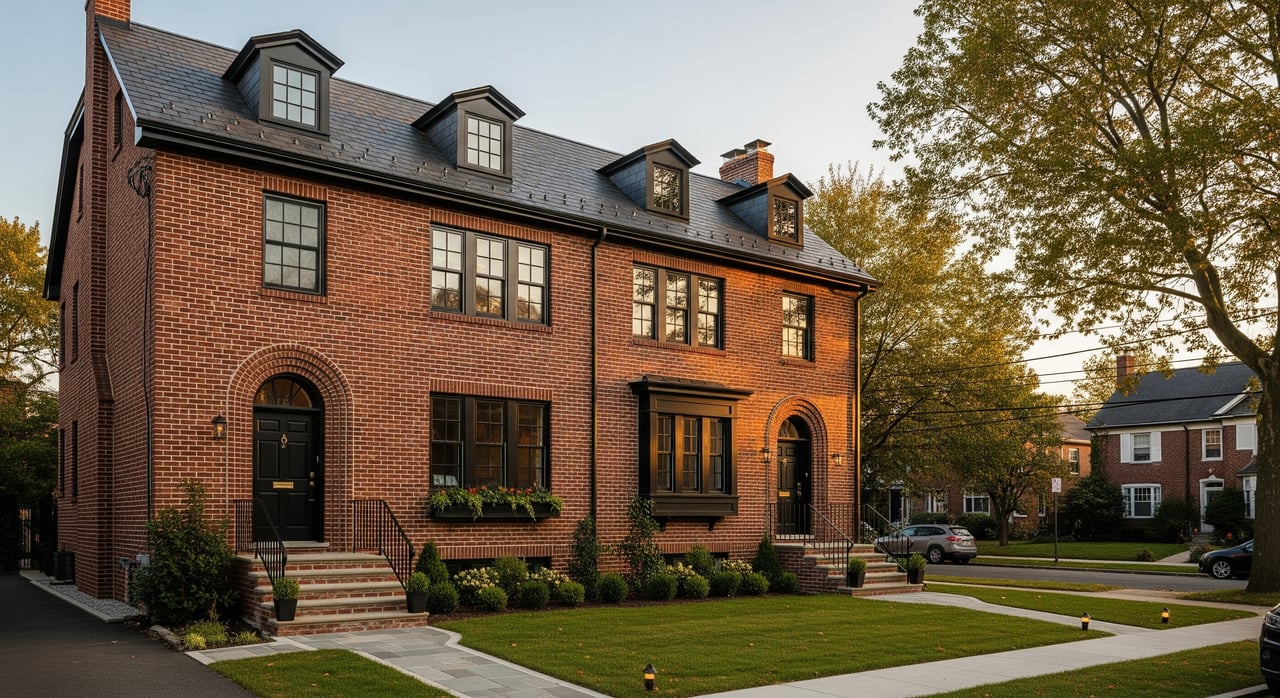
Thinking about living in one unit and renting the other to cut your housing costs in Nutley? You are not alone. With strong commuter access to Newark and Manhattan and steady renter demand across Essex County, a smart house hack can help you build equity while someone else helps pay the mortgage. In this guide, you will learn how to price rents, compare financing options, run the numbers, and map your next steps in Nutley. Let’s dive in.
Why Nutley works for house hacking
Nutley sits in Essex County with commuter access to Newark and New York City. That proximity supports solid renter demand, especially when a property is near bus routes or convenient road connections. Your duplex also competes with nearby towns like Bloomfield, Belleville, Clifton, and Fairfield, so local rent and price trends in those areas matter too.
Before you buy, verify a few local items that can change your numbers:
- Rental registration and certificate-of-occupancy requirements for each unit.
- Zoning and occupancy limits for 2 to 4 unit properties.
- Any inspection standards or upgrades required to legally rent.
- Standard landlord-tenant rules like notice periods and security deposit limits.
Finally, property taxes are a big line item in New Jersey. Confirm the actual tax bill through Essex County records rather than estimating from the purchase price.
How to price your rental unit
Solid rent estimates are the backbone of a successful house hack. Triangulate your market rent using several sources rather than relying on a single listing.
- Start with recent comparable listings and leased comps for the same bedroom count and condition, ideally from the past 1 to 6 months.
- Use public rent data tools to cross-check asking ranges. Recommended sources include HUD Fair Market Rents for a baseline, Zillow Observed Rent, RentCafe, Apartments.com, and Rentometer.
- Adjust your estimate for unit details: square footage, bed and bath count, parking, in-unit laundry, finishes, and which utilities are included. Ground-floor units and top-floor units may rent differently.
- Account for seasonality and concessions. Winter deals and first-month-free offers can skew the picture.
- Use HUD’s FMR as a sanity check. If your target rent is far above or below, investigate condition, location, or amenities.
Document your rent comps in a simple worksheet. A lender may ask for evidence if they plan to recognize projected rental income for qualifying.
Financing options for owner-occupant duplexes
Financing can be a powerful lever when you plan to live in one unit. The right program affects your down payment, monthly payment, and qualification.
FHA loans
- FHA allows you to purchase 2 to 4 unit properties as an owner-occupant with as little as 3.5% down, subject to credit and income requirements.
- You must plan to occupy one unit as your primary residence. Properties must meet HUD minimum condition standards.
- FHA requires upfront and annual mortgage insurance premiums that raise your monthly cost.
- Many lenders can use projected rent from the other unit(s) to help you qualify when supported by market comparables.
Conventional loans
- Conventional financing can reduce ongoing mortgage insurance cost, especially with a down payment of 20% or more.
- Minimum down payment requirements for owner-occupied 2 to 4 unit properties are often higher than for single-family, commonly 15% to 25% depending on the lender and your profile.
- Conforming loan limits vary by county and by unit count. Verify the current limit for Essex County.
- Lenders may credit stabilized market rent in underwriting with proper documentation.
VA loans (if eligible)
- Eligible veterans can purchase 2 to 4 unit properties with favorable terms, including potential zero down, when occupying one unit.
- Confirm occupancy and entitlement rules with a VA-approved lender.
Portfolio and community lenders
- Local banks and credit unions sometimes offer flexible owner-occupant multi-family programs. These can help if standard program rules or property conditions make conventional or FHA tough.
What lenders look for
- Reserves. Multi-unit loans often require several months of principal, interest, taxes, and insurance on hand.
- Debt-to-income. Lenders add PITI and may include allowable rental income to calculate your ratio.
- Property condition. FHA may require certain repairs before closing. Conventional lenders may allow repair escrows in some cases.
Run the numbers like an investor
Your process should be simple, repeatable, and conservative. Here is a framework you can use on every property.
- Collect rent comps for the same unit types you will rent, ideally 1 to 6 months recent.
- Confirm which utilities are tenant paid versus owner paid: heat, hot water, gas, electric, water, and sewer.
- Calculate Gross Scheduled Income by summing market rents for all units.
- Apply vacancy and credit loss, typically 5% to 8% in a stable suburban market, to estimate Effective Gross Income.
- Estimate operating expenses. Include property taxes, insurance, owner-paid utilities, routine repairs, management, advertising, legal and accounting, and a separate capital reserve.
- Net Operating Income equals Effective Gross Income minus operating expenses.
- Add financing. Calculate annual debt service from your chosen loan scenario.
- Cash flow before taxes equals NOI minus debt service.
- Cash-on-cash return equals annual cash flow divided by total cash invested, including down payment, closing costs, and initial repairs.
- Consider non-cash benefits such as principal paydown and potential tax treatment. Consult a tax professional.
Illustrative examples only
The numbers below are examples to show the math. They are not verified Nutley rents, taxes, or rates. Always replace with current local data and lender quotes.
Example A: Conservative scenario
- Purchase price: $600,000
- Unit rents: 2-bedroom at $2,400 per month and 1-bedroom at $1,800 per month. Gross Scheduled Income equals $4,200 per month, or $50,400 per year.
- Vacancy and credit loss at 7% gives Effective Gross Income of $46,872 per year.
- Operating expenses at 40% of EGI total $18,749 per year.
- Net Operating Income is $28,123 per year.
- Financing: Conventional with 20% down. Loan amount is $480,000 at a hypothetical 6.5% 30-year fixed. Annual debt service is about $36,403.
- Cash invested: $120,000 down plus $6,000 closing costs equals $126,000.
Results: Annual cash flow before taxes is negative $8,280 and cash-on-cash is about negative 6.6%. Consider negotiating the price, improving rents where market supports, increasing down payment, or targeting a property with stronger income.
Example B: Low down FHA angle
- Purchase price: $500,000
- Unit rents: $2,300 and $1,900 per month. Gross Scheduled Income equals $4,200 per month, or $50,400 per year.
- Vacancy at 5% gives Effective Gross Income of $47,880 per year.
- Operating expenses at 35% of EGI total $16,758 per year.
- Net Operating Income is $31,122 per year.
- Financing: FHA with 3.5% down, loan amount $482,500 at a hypothetical 6.25% 30-year fixed. Estimated principal and interest about $2,967 per month, or $35,604 per year, not including FHA mortgage insurance premium.
- Cash invested: $17,500 down plus $6,000 closing costs equals $23,500, not including upfront MIP if financed into the loan.
Results: Before including FHA MIP, annual cash flow is negative $4,482 and cash-on-cash is roughly negative 19% on the small equity invested. Low down payment eases entry but can tighten monthly cash flow. Look for higher rents, a lower purchase price, or a lower interest rate to improve performance.
Levers that move your cash flow
- Rent accuracy. Use multiple comps and refresh them every few weeks.
- Utility structure. Separating or billing back heat, electric, and water can materially shift expenses.
- Purchase price and terms. Price, credits, and rate buydowns matter.
- Operations. Self-management, preventative maintenance, and timely renewals support stability.
Operating assumptions for Nutley-style duplexes
Use realistic ranges when you build your pro forma:
- Vacancy and credit loss: 5% to 8% in stable suburban markets. Choose based on recent local indicators.
- Maintenance and repairs: Budget 5% to 10% of Effective Gross Income, leaning higher for older buildings.
- Property management: If you self-manage as an owner-occupant, you may avoid a fee. If you hire out, budget 8% to 10% of gross rent for small portfolios.
- Insurance: Premiums vary by building age and exposures. Get quotes early.
- Property taxes: Verify the actual Essex County tax bill. Do not estimate from the purchase price.
- Capital expenditures: Reserve at least $3,000 to $6,000 per unit per year for older properties, depending on the age of the roof, heating systems, hot water, and other big-ticket items.
- Utilities: Clarify who pays for heat, hot water, gas, electric, and water or sewer. Owner-paid utilities can significantly reduce cash flow.
Step-by-step plan to buy and house hack in Nutley
- Gather property data. Collect current rents, leases, security deposits, and tenant payment history for any occupied units.
- Build your rent comp set. Use recent local listings and leased comps to price each unit type.
- Confirm taxes, utilities, and insurance. Pull the actual tax bill, request 12 months of utility history, and get an insurance quote.
- Inspect the property. Order a full inspection with multi-family scope. Note any repairs that may be required for rental licensing.
- Verify local rules. Check Nutley’s rental registration, certificate-of-occupancy, and occupancy limits for your unit count.
- Engage lenders early. Request pre-approval scenarios for FHA, conventional, and VA if eligible. Ask how projected rent can be used for qualification, what reserves are required, and what seller credits are allowed.
- Model multiple financing paths. Run conservative and low-down options and add sensitivity for interest rates, rents, and vacancy.
- Build a 3 to 5 year plan. Include rent growth assumptions, scheduled capital projects, and exit options like refinance or sale.
- Line up management. Decide whether to self-manage or interview local managers and compare fees versus your time.
Common pitfalls to avoid
- Underestimating property taxes. Always use the current bill and consider reassessment risk.
- Ignoring utility allocations. Owner-paid heat and water can swing your monthly budget.
- Skipping vacancy and CapEx reserves. Smaller buildings feel every turnover and repair. Budget for both.
- Relying on asking rents only. Leased comps and multiple sources produce better estimates.
- Missing local licensing steps. Certificates and registration requirements can delay move-in dates and rent starts if not handled early.
How The Parlay Group helps
You deserve a clear, data-driven plan and a team that negotiates hard on your behalf. The Parlay Group combines high-volume transaction experience with local, town-by-town market knowledge across Northern New Jersey. Here is how we support your Nutley house hack:
- Rent comps and pricing. We triangulate up-to-date comps and MLS data to validate rents by unit type and condition.
- Deal structuring and negotiation. We pursue price, credits, and terms that strengthen your cash flow and protect your downside.
- Regulatory guidance. We help you navigate rental registration, certificates of occupancy, and required inspections.
- Financing coordination. We connect you with lenders who understand owner-occupied 2 to 4 unit loans and projected rent underwriting.
- End-to-end service. From underwriting and offer strategy to inspections, repairs, and tenant placement, you stay informed at every step.
Ready to explore a duplex in Nutley? Reach out to The Parlay Group to map your numbers, compare loan options, and target the right properties. Let’s Connect.
FAQs
Can I use FHA to buy a duplex in Nutley?
- Yes. FHA allows owner-occupants to buy 2 to 4 unit properties with as little as 3.5% down, subject to property condition and county loan limits.
How much cash do I need to start house hacking in Nutley?
- It depends on your loan type, but plan for the down payment, closing costs, reserves, and initial repairs; FHA lowers the down payment while conventional can reduce ongoing mortgage insurance costs.
Will my lender count the other unit’s rent when I qualify?
- Many lenders can credit projected market rent from the other unit(s) with proper documentation and comps, though rules vary by program and lender.
What expenses should I budget for on a Nutley duplex?
- Include property taxes, insurance, owner-paid utilities, routine maintenance, management if used, legal and accounting, and a separate capital reserve of $3,000 to $6,000 per unit per year for older buildings.
How do I estimate market rent for my unit in Nutley?
- Use multiple sources like recent leased comps, HUD Fair Market Rents as a baseline, and current listings on major platforms, then adjust for unit features and seasonality.