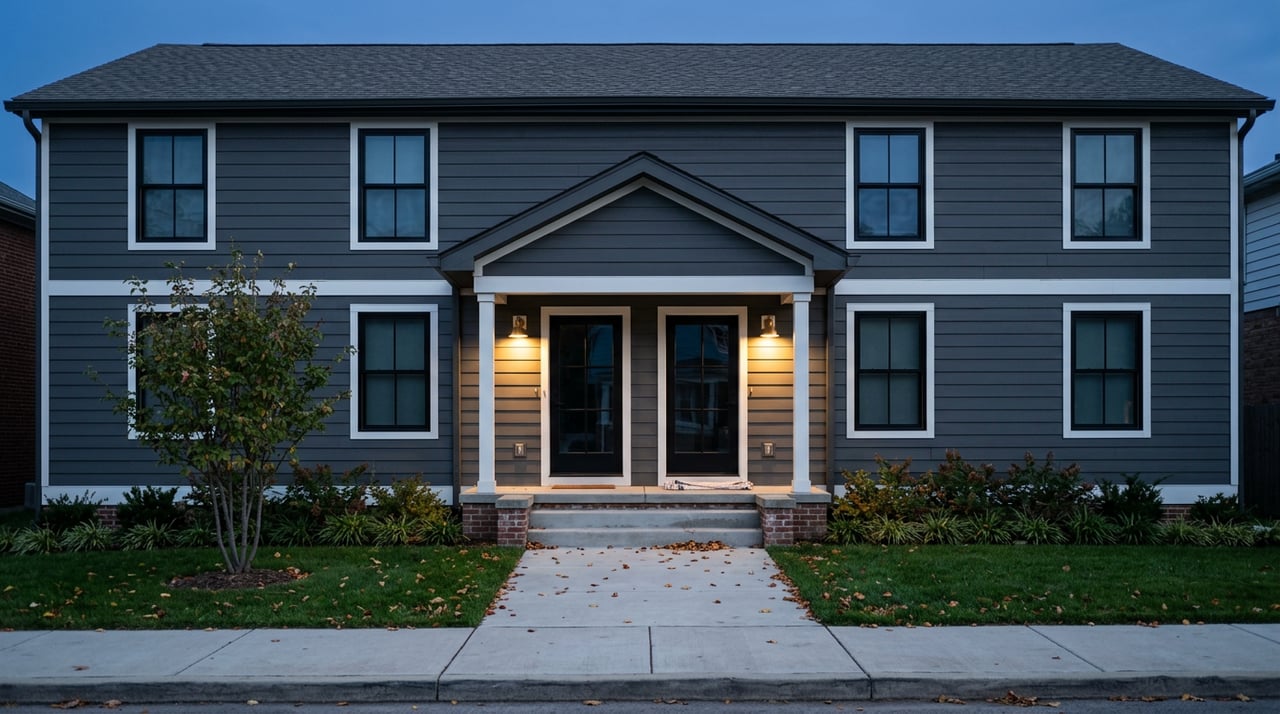
A buyer under contract on a two-family in Secaucus recently assumed the closing would move like any other Hudson County deal. It didn't. Before a new owner or tenant could legally occupy the property, the town required a sale/rental certification, effectively a certificate of continued occupancy, complete with its own inspection and its own timeline. Nothing about that requirement has to do with rent. It has to do with occupancy law, and it's spelled out in Chapter 64 of the town code, amended as recently as Ordinance 2024-10 and reaffirmed in the council's own meeting minutes as late as August 2025.
That surprise is a good entry point into a bigger one. Investors comparing Secaucus to Jersey City, Hoboken, or Union City often assume the whole county plays by the same rent rules. It doesn't. Secaucus has no rent control ordinance at all. What's less obvious, and more useful if you're underwriting a deal here, is that the absence of a legal cap hasn't turned the town into a landlord's free-for-all. Something else is doing the work a rent-control ordinance would normally do, and figuring out what that is changes how you should read the town's rent data.
The One Hudson County Commuter Town Without a Rent Cap
New Jersey has no statewide rent control law. Every cap comes from a local ordinance, and Hudson County has some of the most active ones in the state. Jersey City's Chapter 260 limits most covered buildings to the lesser of the annual CPI change or 4 percent. Hoboken runs its own ordinance under Chapter 155. Union City, West New York, North Bergen, and Fort Lee all cap renewal increases too. Search the Secaucus municipal code for an equivalent chapter and you won't find one.
| Hudson County Town | Rent Control Ordinance | Typical Annual Cap |
|---|---|---|
| Jersey City | Yes (Chapter 260) | Lesser of CPI or 4% |
| Hoboken | Yes (Chapter 155) | Tied to CPI |
| Union City | Yes | Municipal cap |
| West New York | Yes | Municipal cap |
| North Bergen | Yes | Municipal cap |
| Fort Lee | Yes | Municipal cap |
| Secaucus | No | Market rate at renewal |
For an owner of a small multi-family, that's a real difference on paper. Nothing in the Secaucus code stops you from resetting rent to market when a lease turns over. The question worth asking is whether the market has actually been behaving that way.
The Rents Aren't Racing Ahead Just Because Nothing Is Stopping Them
RentCafe's tracking of Secaucus buildings with 50 or more units, sourced from Yardi Matrix, put average rent at $3,027 as of January 2026, up just 0.12 percent from $3,023 a year earlier. That's close to flat, in a town with no legal ceiling on renewal increases. Jersey City, where the ceiling exists, averaged $3,164 in November 2025. The gap between a town with a rent cap and a town without one is a few percentage points, not the wide spread you'd expect if the ordinance itself were the dominant force setting price.
Zumper's data, pulled from a different slice of the market, tells a different story. As of August 15, 2026, Zumper puts Secaucus's average rent at $2,700, up 10 percent over the past year. That's a steeper climb than RentCafe's large-building figure shows over roughly the same window. Neither number is wrong. They're measuring different buildings. Zumper's sample leans toward smaller, older stock and individual unit listings. RentCafe's leans toward the large, newer, amenity-heavy communities that dominate the town's rental inventory. If you're underwriting a three-family on a side street, the steeper Zumper trajectory is probably closer to your reality than the flatter big-building average. The gap between the two data sets comes down to which slice of Secaucus's housing stock your comps sit in, not the ordinance.
What's Actually Setting the Ceiling on the Big Buildings
The reason the large-building average has barely moved is supply, not statute. The Waverton, a 116-unit riverfront community at 1631 Paterson Plank Road, opened in 2022 and leased more than half its units within two months, developed by Woodmont Properties, PIRHL, and Canoe Brook Development. It runs on a 30-year PILOT agreement and set aside roughly 20 percent of its units as affordable, which shapes what a meaningful share of the building can charge regardless of what the open market will bear. CBRE's institutional team closed the building's sale for $47.8 million on January 29, 2026, with Canoe Brook retaining a stake and the buyer undisclosed. Institutional money still likes this corridor, even at a price shaped partly by an affordability commitment rather than pure market rent.
A few minutes away, Atlantic Realty Development Corporation's Xchange at Secaucus Junction added a second apartment building, Next, along with a new amenity center called The Station, both designed by Perkins Eastman and announced in early 2025. Large-scale supply arriving on a predictable schedule does more to hold a town-wide rent average in check than any ordinance would, because it gives renters a real comparison point even where no legal ceiling requires one.
The Town Put Its Enforcement Energy Somewhere Else
Secaucus hasn't ignored rental housing. It's aimed its regulatory attention at unit legality instead of price. Chapter 154 of the town code, adopted in 2018, targets unlawful residential units, meaning apartments carved out of homes without the right permits or a use variance. An owner caught renting one faces fines between $500 and $2,000 per day, the town can claim 66 percent of the monthly rent as damages, and any rent collected while a violation is active has to sit in an interest-bearing escrow account until the case resolves. The town also flatly prohibits short-term rentals under 30 days. Between the two rules, Secaucus built a strong code-enforcement regime around what a unit is allowed to be, not around what it can charge once it's legal.
That distinction should change your due diligence checklist. In Jersey City, the first question on a multi-family is often whether the unit is rent-controlled and since when. In Secaucus, the equivalent first question is whether the unit is legal, meaning it carries the permit history and occupancy record to survive a town inspection.
The Closing-Day Detail That Has Nothing to Do With Rent
Which brings the story back to where it started. Secaucus requires a sale/rental certification before any one-family, two-family, multi-family, or commercial property can change hands or change tenants. The requirement lives in Chapter 64 of the town code, was amended by Ordinance 2024-10, and the council reaffirmed the same certificate-of-occupancy language in its own meeting minutes as recently as August 2025. An owner has to apply, the town has to inspect, and the town has to issue the certificate before a new tenant or owner can legally occupy the unit. A buyer who assumes a Secaucus closing will move at the pace of a rent-controlled Jersey City deal, where most of the paperwork friction is about verifying legal rent history, can be caught off guard by a different kind of friction here: waiting on a town inspector's calendar.
What This Means If You're Underwriting Here
- Don't import a Jersey City or Hoboken rent-growth assumption wholesale. No cap exists in Secaucus, but the large-building average barely moved between January 2025 and January 2026. Check which segment of inventory your comps actually come from before penciling in aggressive year-over-year increases.
- Confirm unit legality before you confirm rent. Ask for certificate of occupancy history and any prior Chapter 154 violations before taking a unit count at face value.
- Build real time into your closing calendar for the sale/rental certification inspection. It's a required step, not a formality either side can waive away.
- Watch the PILOT-backed buildings as your leading indicator. When large communities like The Waverton or Xchange add inventory, that moves town-wide rent more than any regulatory change, because there isn't one coming.
Quick Answers
Does Secaucus have rent control? No. Unlike Jersey City, Hoboken, Union City, West New York, North Bergen, and Fort Lee, Secaucus's municipal code has no rent-leveling ordinance, so owners can reset rent to market at lease renewal.
What is Secaucus's sale/rental certification? It's a required town inspection and certificate, often called a certificate of continued occupancy, that an owner of a one-family, two-family, multi-family, or commercial property must obtain under Chapter 64 of the town code before a new tenant or owner can occupy the unit following a sale or lease change.
If you're weighing a small multi-family purchase in Secaucus, or trying to figure out how the deal math looks once you factor in the certification timeline and the town's supply pipeline, we've also walked through the numbers on evaluating small multi-family deals in Secaucus separately. Either way, the regulatory picture here doesn't match the rest of Hudson County, and pricing a deal off the wrong assumptions costs more than a missed inspection date. The Parlay Group works Secaucus multi-family deals regularly enough to know where the town's actual friction points sit. Let's Connect.